

The Canon is elastic
Executive Editor Thomas Gebremedhin on Outsider Editions, Doubleday’s new reissue series

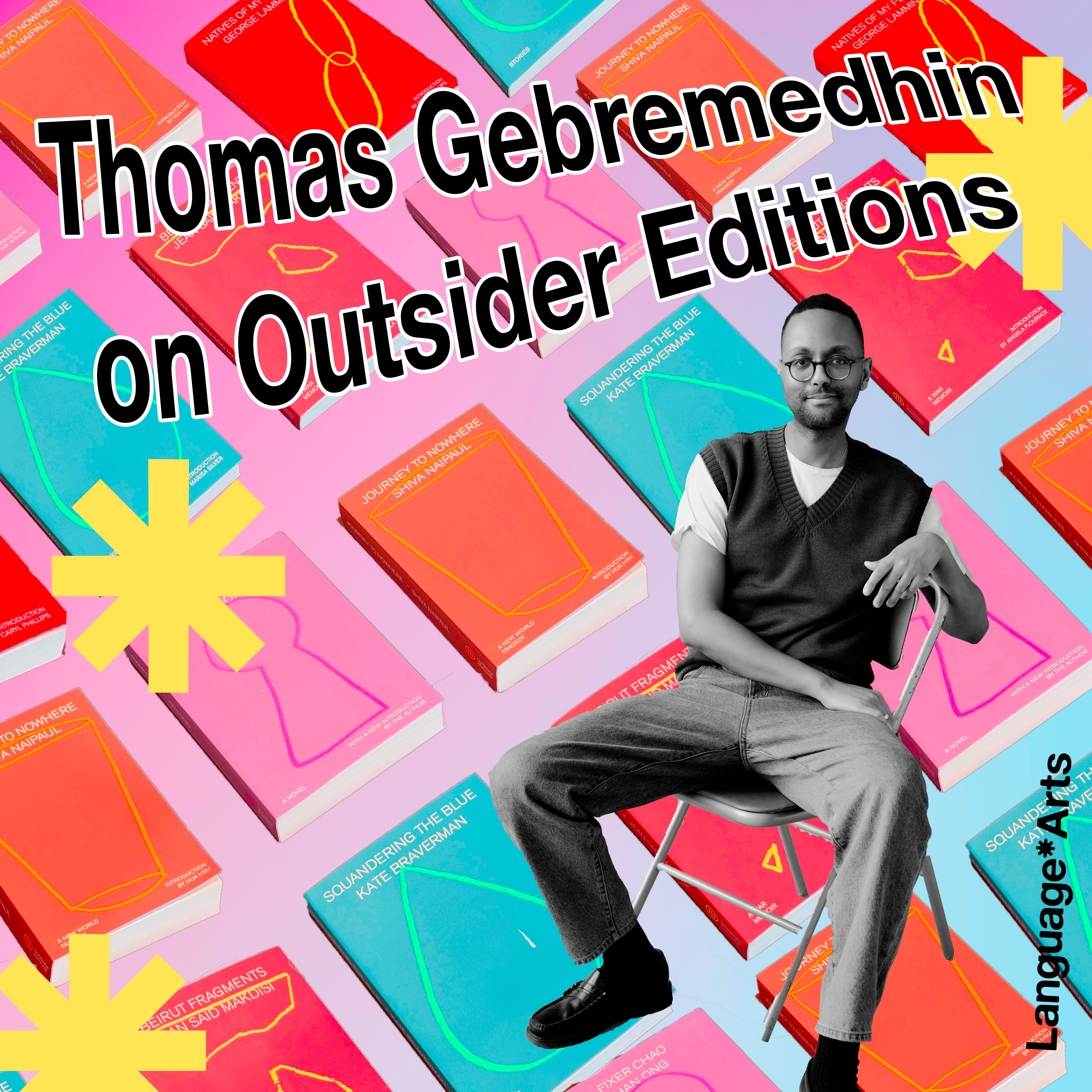
“Rediscovery doesn’t happen by accident,” Gebremedhin tells me over the phone last month. “Books return to public life because people fight for them.”
I spend a lot of time thinking about how to help books out: Seeing if I can include them in a list, pitching reviews and author interviews, telling my friends the books they absolutely have to read. Often, it feels like the shot clock is running out (I watched 2 Knicks games) and then it’s time to start pitching whatever’s coming out next. Kind of like when I (briefly) worked in fashion: two seasons ahead, but somehow still always behind.
What happens to the books that don’t get prizes, assigned to curriculum, passed down among unmanicured hands, or have their covers plastered across every media outlet? They may not get reprinted; they may be lost, drop-kicked off the Canon.
Publishers who reissue books are doing us all a public service by lending their taste, resources and pure love of the game to get good books back in the hands of people who wouldn’t have otherwise gotten to read them. Which is what makes Outsider Editions, a new reissue series from Doubleday, so exciting.
Thomas Gebremedhin, Doubleday VP and executive editor, has always had a complicated relationship to the idea of the Canon. He’s long been drawn to books that expand its often too-narrow picture: books by women, queer people and writers of color, but also books that don’t necessarily fit comfortably within categories that publishers tends to highlight. “I have felt the Canon is far narrower than the world that it claims to describe,” he says.
A couple years ago, he’d gotten a submission called Fish Tales by Nettie Jones, which Toni Morrison had originally edited during her time at Random House, from Naomi Huffman and Julia Ringo at Hagfish Books. Thomas had first encountered it as an MFA student at Iowa, and its uproarious, electric glamour had always stuck with him. “It’s this vibrant portrait of Black life in the 1970s and 1980s that shares a kind of cultural DNA with Bright Lights, Big City,” he says. “It felt every bit as ambitious and culturally significant as many novels that became fixtures of the canon and yet it just disappeared from the conversation.”
There wasn’t really a place to publish it within Doubleday. (It was published by FSG.) But it got him thinking about other books that had slipped from view, especially post-war through present day titles.
“Once you start looking, you find examples everywhere of books that were acclaimed, but neglected, books that were ahead of their time, books that were championed by writers, but never fully embraced by these institutions,” he says. “I felt they deserved a home, and so with my team, I built it.”
This week, Outsider Editions releases its first season lineup: five reissued books designed by creative director Oliver Munday, who is behind some of the most iconic book covers of the last five years, including Stay True. Munday is also an author with a short story collection out this month called Head of Household. Each title features an introduction by one of today’s major writers, to help establish a kind of creative lineage and reexamine the works from a contemporary lens.
“I really hope people go out and buy these books because these kinds of endeavors are important to readers everywhere,” says Gebremedhin. “My goal is that these writers stop being treated like omissions that require a kind of correction, and instead they are recognized as just what they are: major writers who deserve a permanent place in the canon, which is elastic and always should be evolving.”
Ahead, I chat with Thomas about Outsider Editions, the homogeneity of publishing, and the beauty of a French flap cover. You can order the books here. (They make a great gift for the person in your life who has read everything.)
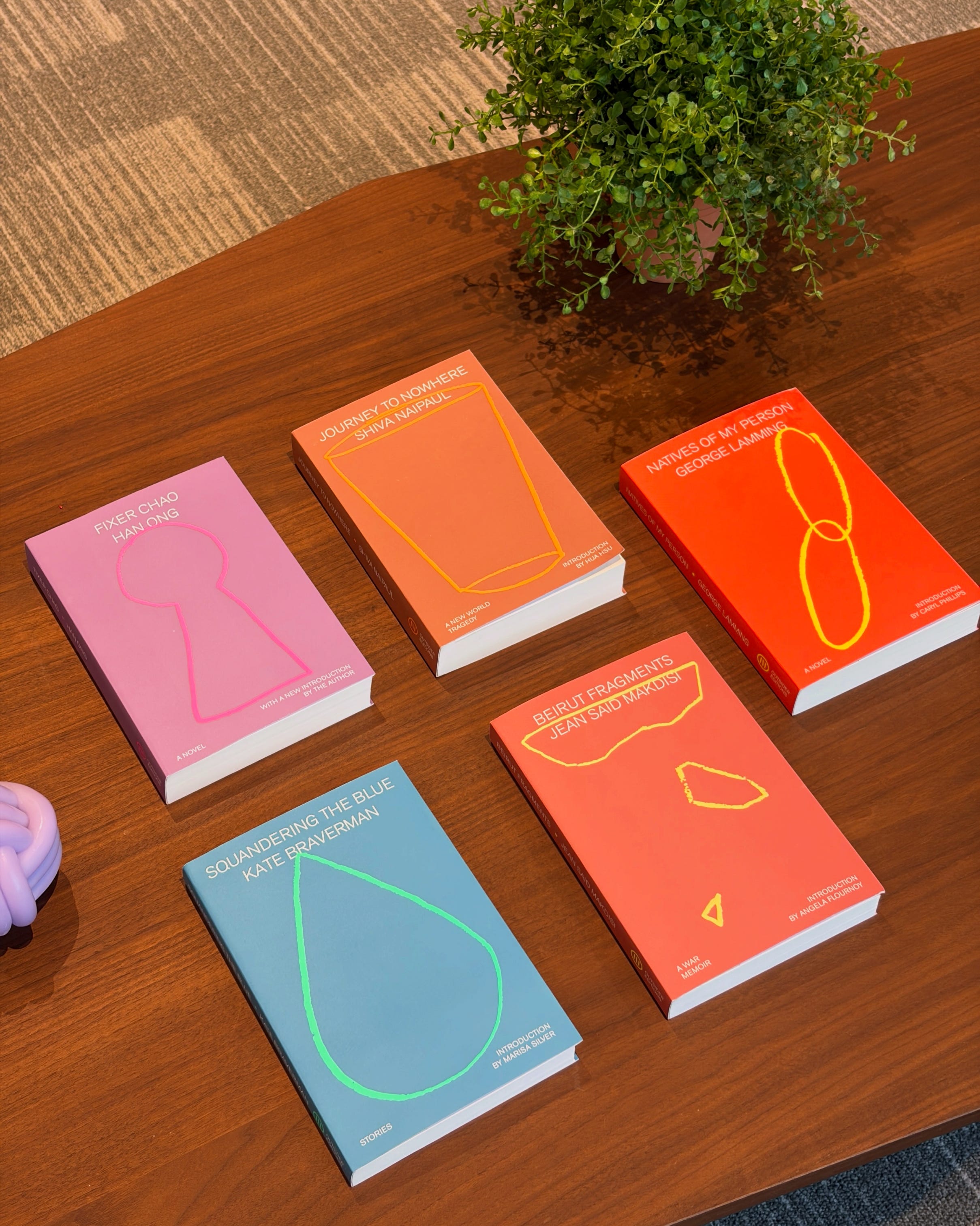
Here is the lineup for Outsider Editions’ first season:
SQUANDERING THE BLUE: Stories by Kate Braverman, introduction by New York Times bestselling author and O. Henry Prize winner Marisa Silver
First published in 1990, this debut short story collection from the revered LA writer follow women on the edge of ruin as they navigate love and addiction in Southern California
NATIVES OF MY PERSON: A Novel by George Lamming, introduction by Booker Prize finalist and PEN/Open Book Award winner Caryl Phillips
Written by one of the Caribbean’s great writers of the 20th century, this novel was originally published in 1972. Set amidst the backdrop of England and Span’s fight for colonial domination of the West Indies, it follows a nameless comander who navigates the uncharted waters of both the ocean and the psyche of the empire.
BEIRUT FRAGMENTS: A War Memoir by Jean Said Makdisi, introduction by National Book Award finalist Angela Flournoy
This 1990 memoir catalogs everyday life in Beirut during Lebanon’s civil war and the Israeli invasion of the early ‘80s. Jean Said Makdisi (sister of the late critic Edward Said) offers the perspective of a Palestinian Christian shaped by Jerusalem, Cairo, Beirut, London, and America.
JOURNEY TO NOWHERE: A New World Tragedy by Shiva Naipaul, introduction by Pulitzer Prize winner Hua Hsu
This important work of reportage investigates the Jonestown massacre and the disillusionment of the late ’60s and early ’70s. Originally published in 1981, the author Shiva Naipaul, who met an early death was forty, was largely overshadowed by his brother, V.S. Naipaul, the renowned Trinidadian-British writer and Nobel Prize recipient.
FIXER CHAO: A Novel by Han Ong, new introduction by the author
A cult classic before its time, Han Ong’s satirical debut novel follows a gay Filipino sex worker who teams up with an embittered author to con New York’s elite.
Sophia June: What was the first book you acquired?
Thomas Gebremedhin: Fixer Chao was the first book that I acquired. Han Ong is this incredibly important literary presence and he regularly publishes in the New Yorker. He has a story in the fiction issue right now, and yet his debut novel has been out of print for roughly 25 years. It’s hilarious and it’s sexy, and it’s one of the sharpest portraits of race in class and ambitious ambition in New York that I’ve ever read. The fact that a book that good could vanish from circulation to me suggested that literary history may be less meritocratic than we would probably believe so.
SJ: There really aren’t a lot of places reissuing a title that was maybe only written, say, 30 years ago.
TG: This has been a really fun intellectual exercise because there’s a book that I’m going to reissue for season two, Sap Rising by Christine Lincoln, which was published in 2000. There are a number of factors that go into whether a book received the kind of attention that it was due, and a lot of that falls on publishers and media.
SJ: It’s really a feat you’ve been able to do this. Doing anything novel, no pun intended, in publishing is so incredibly hard. And it’s not like you’re not reissuing bestsellers.
TG: The benefit of being at Knopf Doubleday is like I’m working with people who really care about books. Our publisher Bill Thomas, our president, our publicists, Elena, Sara, Michael, this isn’t just a project that I am responsible for. There’s an enormous amount of work that’s being done by the publicists and the marketers and the booksellers and the sales representatives and people like you. Rediscovery doesn’t happen by accident. Books return to public life because people fight for them. There are people like Paul Yamazaki at City Lights or Stephanie Valdez at Community Bookstore in a minor neighborhood in Park Slope, who are just as pivotal to this kind of literary resurrection. Like most worthwhile things, it turns out that something like this requires a great deal of labor and teamwork.
SJ: How did you decide on these works specifically?
TG: I have about four seasons confirmed right now, but these are all books that I’ve read previously, with one or two instances of suggestions. With the first season I focused on storytelling and wanted diversity of thought, not just of background. I wanted the gamut of books that spoke to their time, but also spoke to ours. There is this commitment to breadth, so breadth of voice and form and experience, moving from themes of history and justice towards desire and inheritance and identity.
Fixer Chao I think is as relevant today as it was then. Jean Said Makdisi’s Beirut Fragments, and Jean is Edward Said’s sister, but an accomplished writer and critic of her own, and that memoir is about living through the Lebanese Civil War, and then later the Israeli bombardment of Beirut. It’s a meditation on family memory and what it’s like, the challenge of sort of documenting all of that under extreme pressures. So how do we carry on? is basically the question that memoir asks. Reading it today, it feels less like a historical document than frankly a dispatch from the present. Most important is voice to me, but also just being able to showcase the plurality of the human experience.
SJ: Editors are always shaping the canon. It feels fitting that you’d go back in history to reshape it and pick up what was left behind.
TG: The onus is not on the readers. The onus is on publishers and prize committees and all the other forces that determine which books remain visible over time. Often a lot of these books received excellent reviews. They attracted a readership, they were admired by writers. But what they didn’t receive was sustained attention. It wasn’t continuously taught, reprinted, discussed or championed in a way that allows other books to remain part of the broader conversation. There are a number of reasons for that, but sometimes it’s just that it’s ahead of its time. Sometimes it falls between categories. Sometimes the industry just doesn’t really know what to do with it. Publishing is incredibly homogenous, and at times the books that get priority are the ones in which institution leaders see themselves in. Even though I think all these books are universal, I do think that’s a factor too. So it’s quite nice to be able to contribute to the literary ecosystem in this way.
SJ: Can you tell me a little bit about the design? They’re so striking.
TG: I want readers to spot an Outsider Editions book across a bookstore and immediately understand that it belongs to the same family. We elected to go with a paperback format because paperbacks just feel more democratic: the price point is lower so people have more access to them, and they’re also books that you can just read on a train or carry in your backpack or lend to a friend or leave behind at a cafe or a party. These books all have a very sort of minimal look because we didn’t wanna overwhelm the story. And then there’s the French flap, because if you can use a French flap, use a French flap.