

The Midlife Crisis Reading List
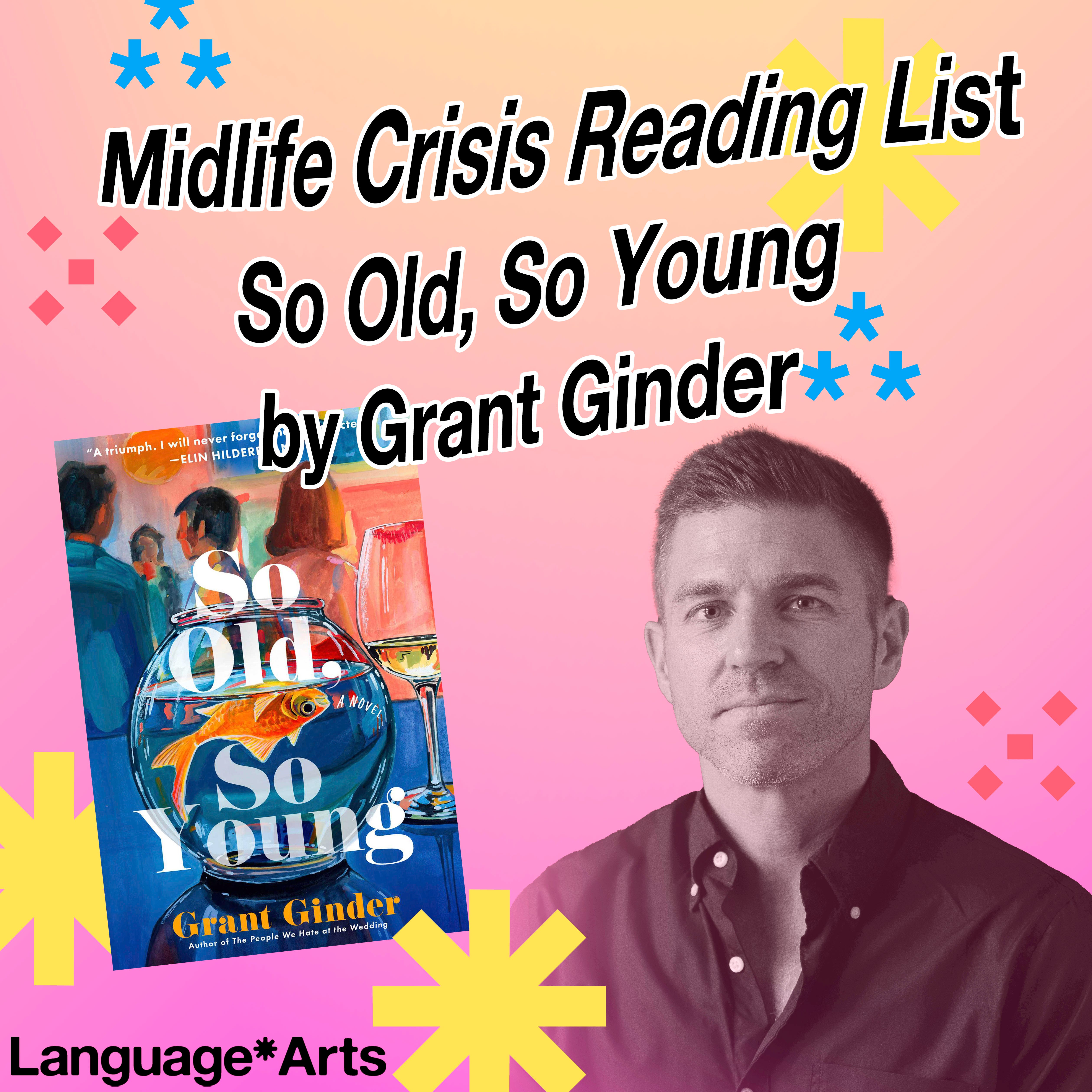
Grant Ginder, the author of 'So Old, So Young' shares the books (and Steven Sondheim musical!) that inspired his new novel.


Last summer, I visited family in Seattle. Fresh off antidepressants, a few glasses of rosé, and a day at the Chihuly Museum pushing my beloved grandmother around in a wheelchair, I excused myself from dinner where I called my boyfriend and started crying while telling him how that I fear, in every moment, that I am losing what I love most, and that everything good will end. “Well,” he said, three hours wiser. “That is the human condition, babe.” (I neglected to tell him I was about to start my period.) I watched my family through the window, breathed, and tried to feel grateful to have something I was afraid of losing. That my condition, at the end of the day, was just plain human. My grandmother and I shared calamari at the museum cafe. She died four months later.
Grant Ginder’s So Old So Young, which follows a group of college friends as they stumble in and out of each other’s lives in the decades after graduating, taps that well-trod bruise on my heart that fears that I am losing what I love most at every moment. Reading it is not only to contend with the condition of being human but to let is suffocate and soothe you—to look at it plainly, to share in it.
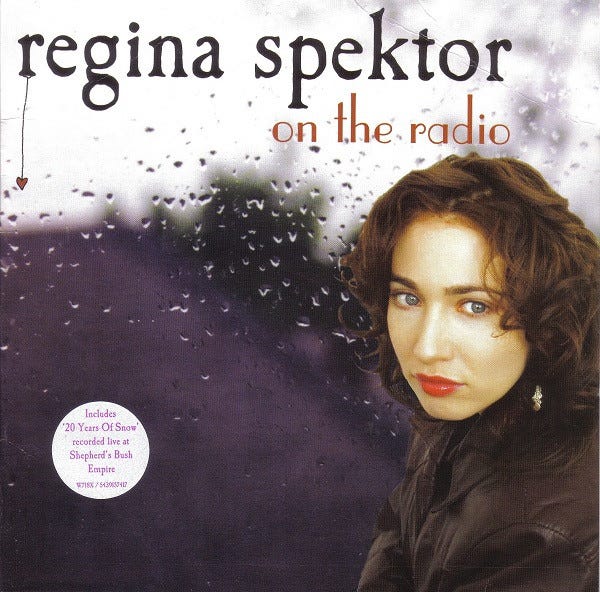
I am not middle aged so I have fewer excuses for my existential crises, but Ginder has graciously written a reading list to help us all tap into the feeling of life getting exponentially faster. To put it best, we need only to look at the novel’s epigraph: “This is how it works / you’re young until you’re not.” — Regina Spektor.
And now, Ginder’s reading list:
By Grant Ginder
The trickiest thing about midlife crises is knowing when you’re having one.
In this way, I suppose they’re a little bit like that tired analogy of a frog, sitting in a pot of boiling water: Everything seems fine, fine, fine, until suddenly you’ve quit your job, left your wife, and bought a $20,000 road bike and eight pairs of Lycra shorts—in other words, until suddenly you’re cooked.
Of course, the other tricky part about midlife crises is that no one is immune from them: Age is the most fundamental fact of existence—if we’re lucky enough to keep on living, every single one of us gets old.
For me, it wasn’t until I was halfway through the seventh draft of So Old, So Young that I realized what I was actually doing was grappling with the very harsh, totally unfair reality that 1) I was no longer 25, 2) I got hungover after a single glass of wine, and 3) Barack Obama was no longer president. And because I can’t afford a $20,000 road bike, and because writing is literally one of two-ish things that I can do relatively well, I kept going, right up until I typed the last word of the eleventh (and final) draft.
The second thing I can do relatively well is reading, and thank God for that. Because it’s in literature that I discovered that the shock I was feeling about turning 40 wasn’t so different from the shock that other people had felt. In other words, waking up in the middle of the night not knowing where the years had gone did not in fact make me psychotic, but rather a human being. And so, without further ado, I present to you a selection of those books (and, in one case, a musical)—five stories about time, and friendship, and all the wonderful, terrible choices we make as we get older.
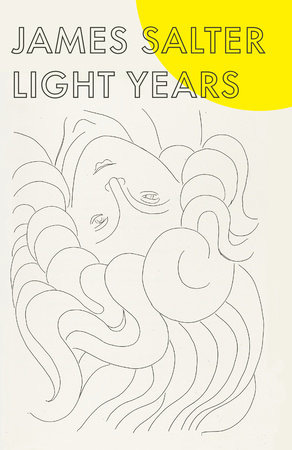
Light Years by James Salter - Vintage, 1975
I honestly lost track of how many times I read Salter’s masterpiece as I wrote So Old, So Young. On the surface, it’s the story of a marriage slowly falling apart over 50 some-odd years, but for me it’s also one of the most incisive novels I’ve read about the passing of time—of how we make all of these little decisions without even thinking about them, until eventually they accumulate into a life.
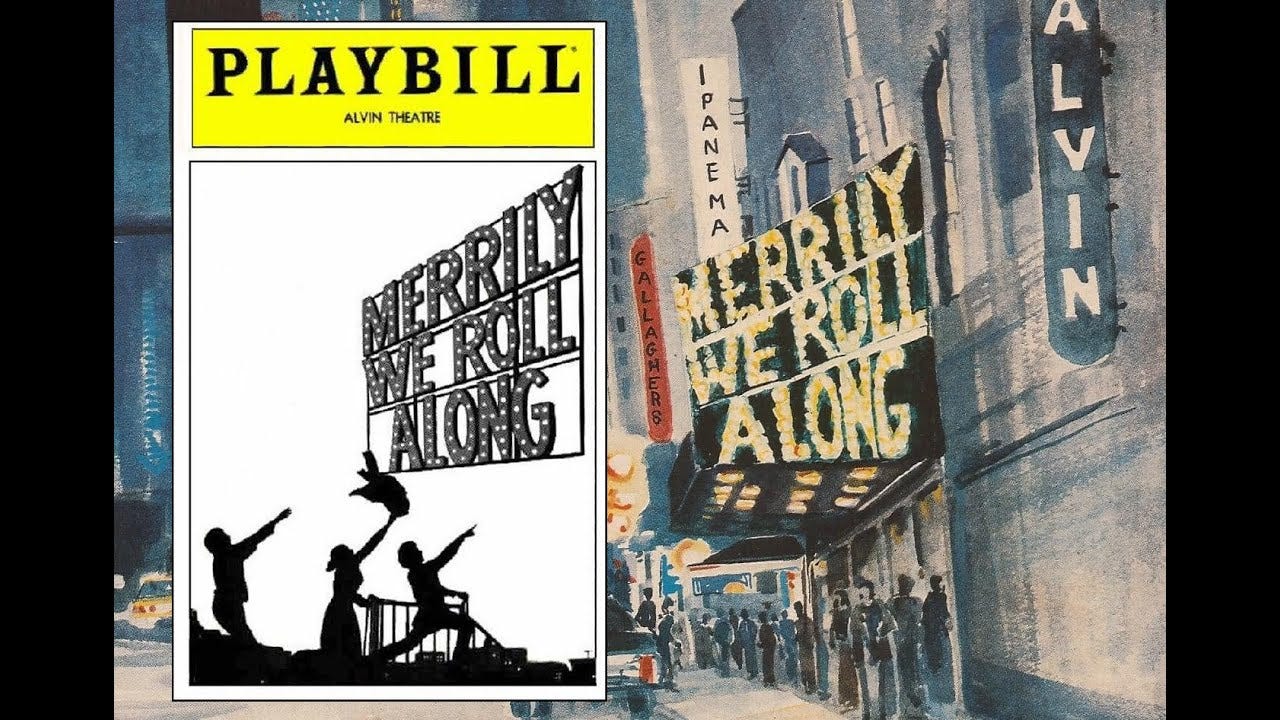
Merrily We Roll Along by Stephen Sondheim - 1981
Okay, I’m breaking the rules here, because Merrily is a musical, but I saw that recent Language Arts contributor (and extraordinary writer) Rob Franklin included a profile of Chloë Sevigny, so I’m going to live on the wild side. So Old, So Young’s structure is a bit unusual—instead of giving us an unbroken chronology, it checks in on six friends at five parties over the course of 20 years. That structure, which is one of the reasons the book took me eleven drafts to write, owes a tremendous debt to Sondheim’s Merrily, We Roll Along, which itself is an adaptation of George S. Kaufman and Moss Hart’s 1934 play of the same name. It’s a cerebral, jigsaw puzzle of a story about youth, friendship, and broken promises, all of which my own work tackles, too. Sondheim (along with Kaufman and Hart) ups the ante by telling the entire story in reverse. I didn’t have another eleven drafts in me, though, so I kept the parties in order.
“In other words, waking up in the middle of the night not knowing where the years had gone did not in fact make me psychotic, but rather a human being.”
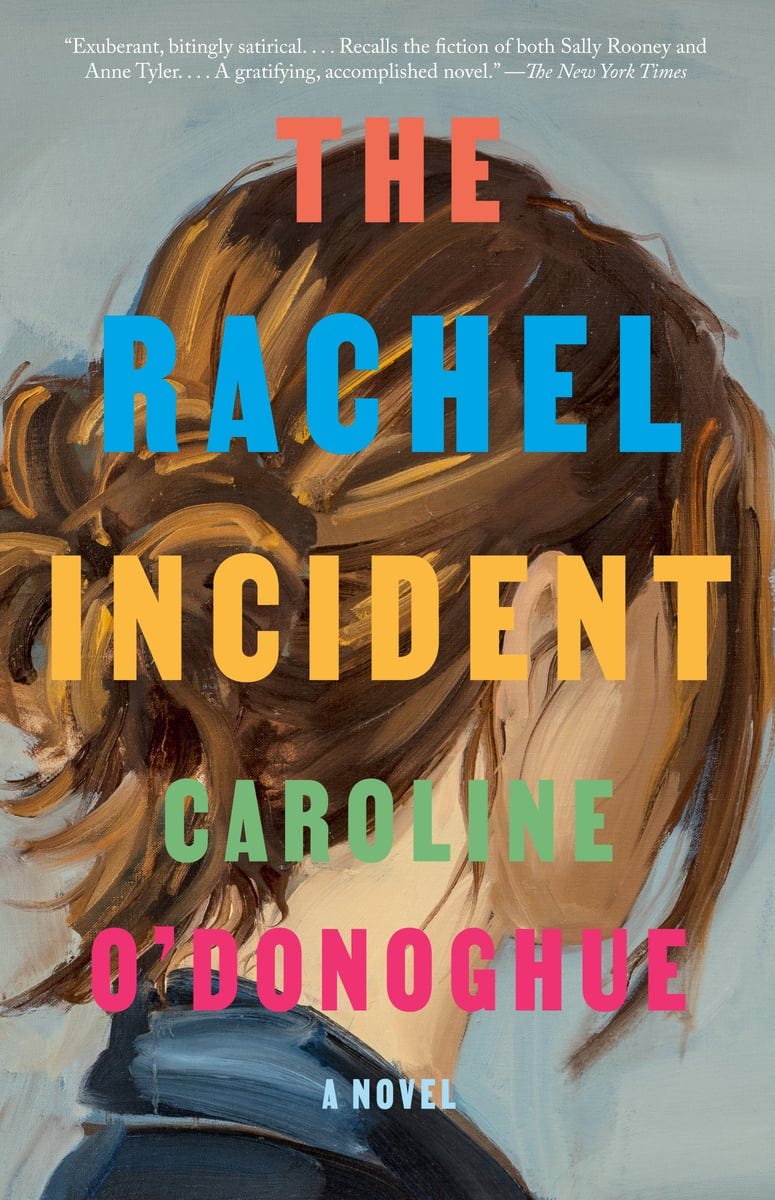
The Rachel Incident by Caroline O’Donoghue - Vintage, 2024
This book has everything I love: a couple of early twentysomethings making some wildly bad decisions; complicated relationships between straight women and gay men; sophisticated examinations of politics, money, and class; and a narrator so compelling I’d follow her off a cliff. The first section of So Old, So Young takes place at a New Years Eve party in 2007, right after the characters have graduated from college, and as I was writing it, I came back time and time again to O’Donoghue’s book. She perfectly captures that hyper-specific nostalgia that so many of us have for our early twenties, those years when we manage to convince ourselves that no hangover is too unbearable, and every consequence can be outrun.
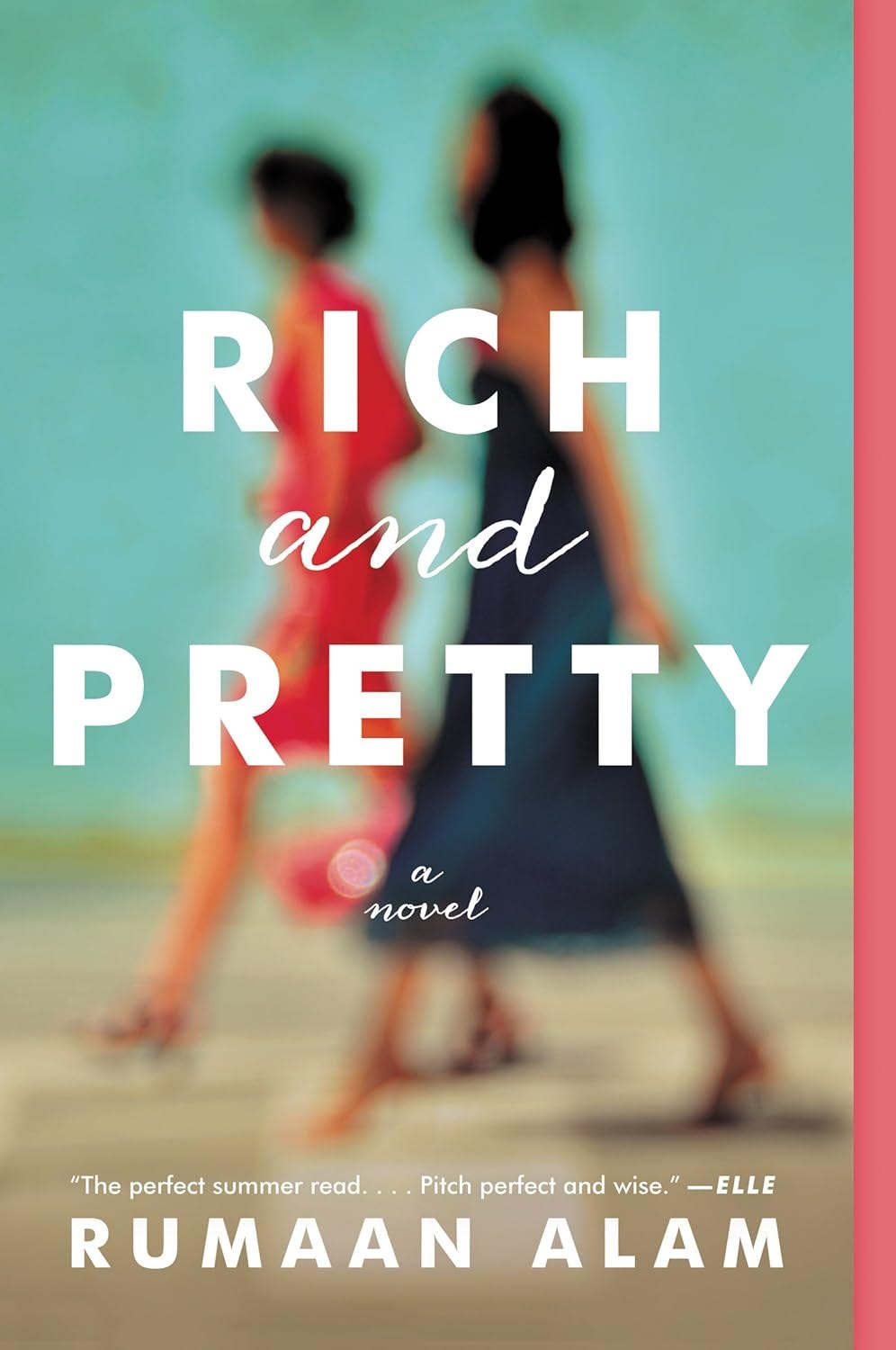
Rich and Pretty by Rumaan Alam - Ecco, 2017
Full disclosure: I love Rumaan. He’ll probably kill me for saying this, but we’re both adherents of the same cheesy, super-earnest workout class at this gym in Brooklyn. And when it comes to his writing, I’m a superfan. Leave The World Behind is one of the most uncomfortable books I can remember reading, which is about the highest compliment I can give. For our purposes here, though, I want to point readers to his debut novel, Rich and Pretty, which tracks the relationship between two lifelong friends who, now in their thirties, struggle to maintain their connection. It’s smart, funny, and has some of the most brutally true observations I’ve ever read about all the ways we come to loathe the people we claim to love the most.
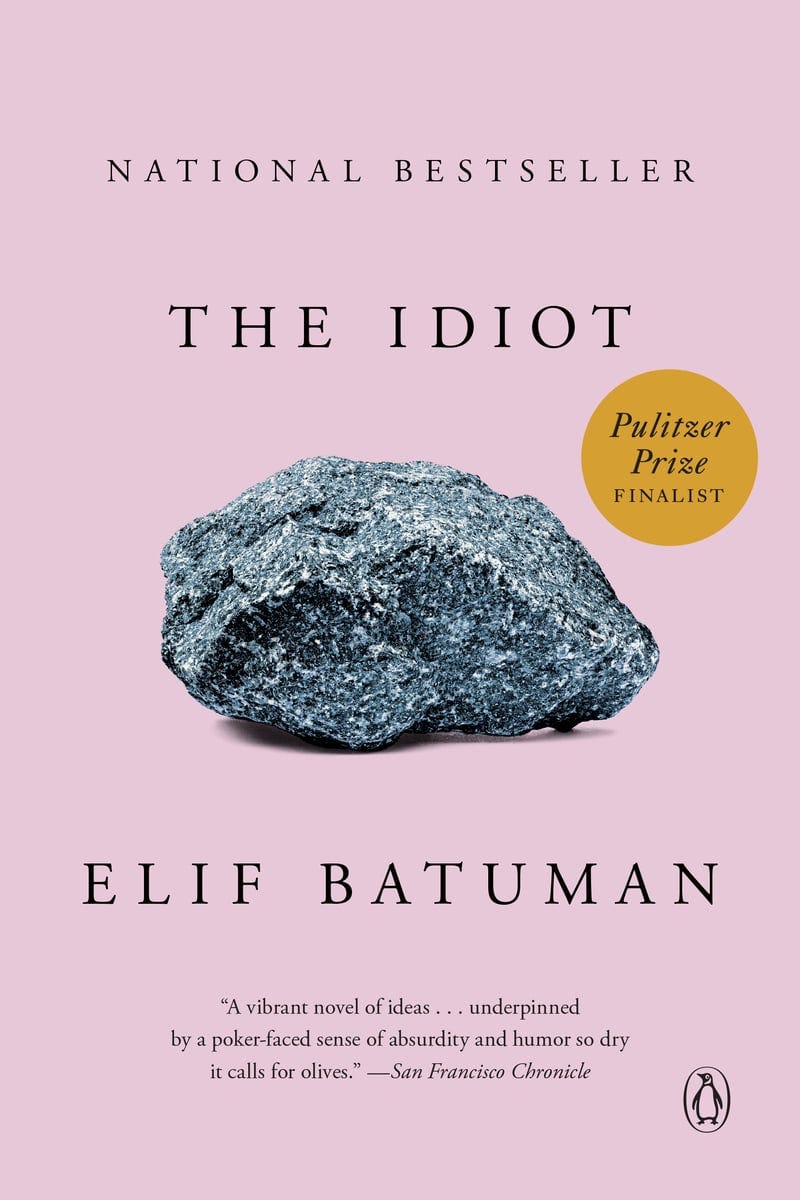
The Idiot by Elif Batuman - Penguin Books, 2018
The Idiot is my emotional support novel in the same way that some people have emotional support dogs (or ducks, or turtles, or llamas, or whatever). It’s the funniest book I’ve ever read, and also contains some of the most thoughtful, insightful writing about the nature of language and love. I read it on the subway when I’m feeling depressed, and also when I’m feeling happy, and just generally when there’s nothing else I want to read. I will include it on any list of reading recommendations I’m ever asked to write, because I’m convinced that if everyone read The Idiot the world would be a better place.
 | A guest post by
|